If you would have told me six months ago that I would be in Rwanda and Zambia, listening to smallholder farmers enthusiastically explain about how the Jersey cow had transformed their lives, I wouldn’t have believed you.
Having been born and raised in Jersey, I have always known our cows are special. They are an icon of the Island, known throughout the world for their beauty, curious nature and delicious milk (which is unbeatable, and I can’t be told otherwise).
However, since delving deeper into JOA’s D4D projects, it quickly became clear that my understanding of what makes our breed so incredible only scratched the surface.
Heat tolerance, disease resistance, ease of calving; these are benefits that didn’t occur to me when thinking about farms here in Jersey. Yet in an African smallholder context, these attributes are not just beneficial, they are potentially life changing.
To deepen my understanding and see our project work in action, I was kindly invited by one of our long-term partners, the Royal Jersey Agricultural and Horticultural Society (RJAHS), to join them on a routine visit to Rwanda and Zambia.
The RJAHS currently leads five JOA-funded D4D projects, with four spread across the two countries. During the visit, I had the opportunity meet important stakeholders and government officials, see key components of the dairy value chain and most importantly, meet the farmers who are the beneficiaries of our projects.
Farm visits
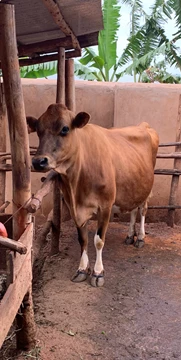
I started in Rwanda, which is geographically much smaller than Zambia and characterised by a topography of seemingly endless rolling hills. While undeniably beautiful, Rwanda is one of the most densely populated countries in Africa, and as a result, many smallholder farmers have very limited land, often keeping just one to five cows in small, terraced sheds.
On my second day in the country, I had the opportunity to visit four smallholder farms in the northern province. Hearing the farmers talk about their experiences drove home the essence of D4D far greater than any report could.
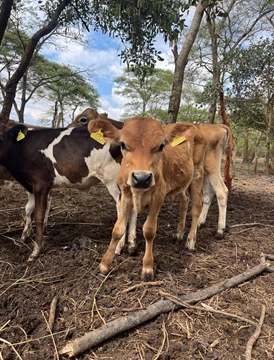
A Jersey calf born through AI
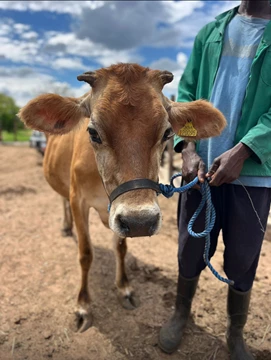
These were farmers who, over the preceding few years had been able to adopt a Jersey cow and, under the helpful guidance and tireless support of Innocent, a local Rwandan farmer working with the RJAHS, had used the Jersey breed to help transform their lives.
I was particularly struck by a woman we visited who is the matriarch of her family. She had previously kept four cows, which together produced around 20 litres of milk per day. She then acquired a Jersey cow. After seeing its efficiency, ease of care, and resilience, she made the bold decision to sell the other four cows and focus entirely on her one Jersey. That single Jersey cow now produces around 18 litres per day, nearly as much as the previous four cows combined, and the money saved on fodder and maintenance is
now being redirected towards school fees and other essentials for her growing family.
An additional benefit is that the milk she keeps for household consumption is of greater nutritional value. Childhood stunting remains a significant challenge in both Rwanda and Zambia, with around 30% of children under five experiencing growth faltering due to chronic undernutrition. Milk offers one of the simplest and most cost-effective ways for low-income households to increase nutrient intake into their children’s diets, and Jersey milk provides higher levels of protein and butterfat than other high-yielding European dairy breeds.
While I only had the opportunity to hear directly from four farmers on the day, it is remarkable to reflect on the tens of thousands of smallholder farmers who can tell similar stories through JOA’s D4D projects in Rwanda.
Implementing Partners
I also had the privilege to meet a number of the RJAHS’s primary in-country partners and government officials, all of whom are critical to the successful implementation of the projects.
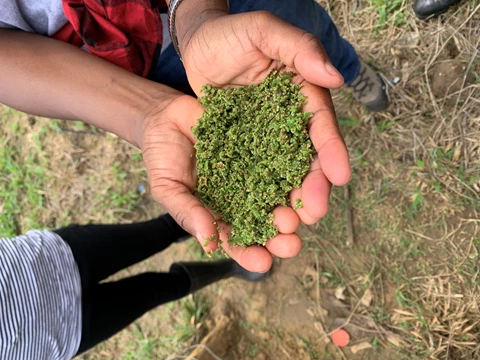
World Agroforestry (ICRAF) are global experts in sustainable agricultural techniques and provide support to the beneficiaries of the Ongera Amata project in Rwanda through training and improved access to fodder. It sounds elementary, but cows can only produce large volumes of high-quality milk if they have the appropriate nutrients, and access to affordable, good quality fodder remains a primary constraint for smallholder farmers in both countries that I visited.
This is a challenge which is being further intensified by climate change, with dry seasons increasing in both length and severity, further limiting fodder availability. East Africa recently suffered one of its most severe droughts in 2024, with one farmer in Zambia sharing his concern that this is not a one-off event but part of a wider trend, with wet seasons continuing to shorten.
This reality reinforces the importance of ICRAF’s work in promoting sustainable, climate-smart agricultural practices. It also highlights the Jersey cow’s suitability for smallholder systems: as a smaller breed with exceptionally high feed-to-milk efficiency, Jerseys often represent a far more practical option for smallholder farmers than larger European breeds such as the Holstein-Friesian and are lighter on the environment.
Songa Plant
A common theme of all the partners that I met was, that despite the challenges, there is a genuine sense of optimism - both about the dairy industry and about the future more broadly. There is a shared belief that through hard work and a community minded approach, a country wide transformation is not only possible, but already underway.
This optimism is physically manifested in the Songa plant, an ambitious project led by the Rwanda Agriculture and Animal Resources Development Board (RAB), with the aim of creating a national centre of excellence to improve the genetic potential of cattle and practices across Rwanda.
Rwanda is a country where cows hold immense cultural value. Owning a large number of cattle, particularly local Ankole cattle prized for their spectacular horns, is a symbol of wealth and status. An unintended consequence of this is that commercial farming, especially on the larger farms, can be highly inefficient; with farmers not focusing on maximising either dairy or beef output. This stands in contrast to Zambia, where larger commercial farms typically achieve significantly higher milk yields than their smallholder counterparts.
As Rwanda’s population continues to grow and land becomes ever more constrained, ensuring that commercial cattle farming moves in a more professional direction will be crucial in meeting the rising national demands in a sustainable manner. This has rightly been identified as a priority within the national dairy strategy.
The Songa plant is still very much in the development phase, and the RJAHS continues to play a proactive role in providing technical and design advice. The project shows tremendous potential, and I am excited to see how it develops in the years ahead.
Milk Infrastructure
In Zambia land is far less of a constraint, being nearly 30 times larger than Rwanda and significantly flatter in its geography. Farms are categorised by milk production, with those producing less than 150 litres per day considered smallholders. As a result, Zambian smallholder farms are often substantially larger than their Rwandan counterparts and may comfortably keep 15, 20, or even 25 grazing dairy cows.
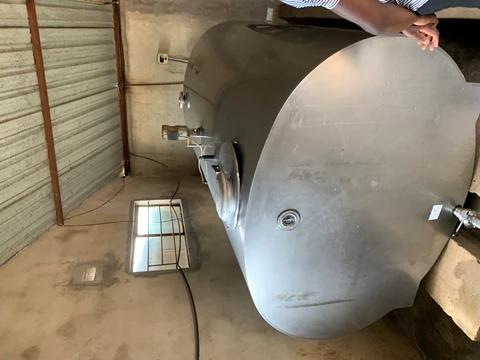
Due to the often vast distances involved, Milk Collection Centres (MCCs) are central to farming communities and act as communal hubs where hundreds of farmers can deliver milk on a daily basis. MCCs are community-led, with boards elected by their members, and they provide a range of essential services beyond milk storage. These often include access to high-quality fodder, veterinary support, and artificial
insemination (AI) services.
MCCs also assess milk quality, often by measuring bacterial counts, which directly affect the price farmers receive. Achieving ‘Grade A’ milk can increase the price by around 20%, a margin that can mean the difference between operating at a profit or a loss.
The majority of Zambia’s MCCs are registered with the Dairy Association of Zambia (DAZ), which helps coordinate the centres and gather information on the challenges faced by farmers. DAZ works closely with the RJAHS on their two Zambia-based projects and kindly acted as both a guide and a base of operations during my time in the country.
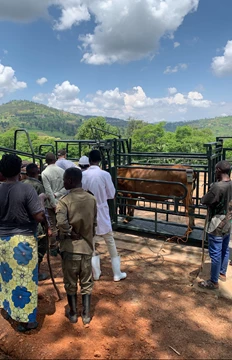
We had the opportunity to visit several MCCs, meet their boards and in one instance an experienced AI technician. A key challenge highlighted by the technician was that although an animal may come into heat, the combination of long distances, poor infrastructure, and a limited number of trained technicians can result in significant delays before insemination takes place. This reduces the likelihood of successful
conception and, over time, can undermine farmer confidence in the AI process more broadly.
As part of their projects in both Rwanda and Zambia, the RJAHS and their implementing partners, RAB and ADRA, work closely with MCC’s and provide extensive training and genetic resources to their AI technicians. This allows AI to be completed more efficiently, cost effectively for the farmers, and with greater levels of success.
African Jersey Forum
International aid is also a great opportunity to establish strong diplomatic relationships with countries across the world and boost Jersey’s international reputation. My visit included meetings with representatives of the British High Commission and the Ministry of Fisheries and Livestock in Zambia; where we discussed our ongoing projects, government alignment and areas of future collaboration.
One of the key matters discussed with the representatives in Zambia was the hosting of the African Jersey Forum, which is a biannual event organised by the RJAHS (and funded by JOA) to bring farmers and key stakeholders from across Africa together to share learnings, insights, and recent research on the Jersey cow with their peers.
With preparations now underway for the 2026 African Jersey Forum due to be held in September, I am looking forward to what will be an undoubtedly great event which will strengthen the growing community of Jersey cattle farmers across the continent.
Final thoughts
Leaving Rwanda and Zambia, what stayed with me most was not just the incredible versatility of the Jersey cow, but the confidence and dignity it brings to farming families; enabling better nutrition, stronger incomes, and a greater ability to plan for the future.
Dairy for Development is not without its challenges, but when built on strong partnerships and local expertise, its impact reaches far beyond milk yields alone. Seeing Jersey’s iconic cow contribute to meaningful, lasting change thousands of miles from home has reinforced my belief in the value of JOA’s Dairy for Development work and the role it can play in building more resilient rural communities.